
Clinical Documentation Translation: Precision for Global Trial Success
Clinical documentation translation converts trial protocols, informed consent forms, and safety reports into target languages while preserving scientific accuracy and regulatory compliance. Pharmaceutical sponsors conducting multi-country studies require translations that meet ICH GCP standards and satisfy ethics committee requirements across diverse jurisdictions.
Table of Contents
What Clinical Documentation Translation Delivers
Clinical documentation translation transforms trial-related materials from source to target languages while maintaining the precision required for regulatory submissions and patient safety. The scope extends beyond word-for-word conversion to encompass cultural adaptation, regulatory alignment, and terminological consistency across document sets that may span hundreds of pages.
Sponsors running multinational trials face a fundamental challenge: every participating site needs documentation in languages that investigators, ethics committees, and trial participants can understand. A protocol written in English must communicate identical procedures to sites in Germany, Brazil, Japan, and South Africa. Informed consent forms must convey risks and benefits in terms that patients comprehend, regardless of their native language.
Professional translation services address this challenge through subject-matter experts who understand both clinical research methodology and target-language medical conventions. These specialists recognize that a "serious adverse event" carries specific regulatory meaning that generic translation cannot capture.
The Scope of Clinical Translation
Clinical documentation translation encompasses materials generated throughout the trial lifecycle. Pre-submission documents include investigator brochures, clinical trial applications, and ethics committee submissions. Active trial materials cover protocols, amendments, case report forms, and patient-facing documents. Post-trial deliverables include clinical study reports, safety narratives, and regulatory correspondence.
Each document type carries distinct requirements. Protocols demand absolute precision in procedural descriptions. Informed consent forms require clarity accessible to lay readers while maintaining scientific accuracy. Safety reports must follow standardized terminology that regulators recognize across jurisdictions.
Document Types and Regulatory Context
Regulatory authorities worldwide require clinical documentation in local languages. The European Medicines Agency expects submissions to include translations certified for accuracy. National competent authorities in EU member states require patient-facing materials in official languages. Health Canada, ANVISA in Brazil, and the PMDA in Japan impose similar requirements with jurisdiction-specific conventions, which is why pharmaceutical regulatory documentation translation plays a central role in any multi-country trial strategy.
Informed consent forms represent the most sensitive document category. ICH GCP guidelines mandate that consent processes occur in languages participants understand. Ethics committees scrutinize translations for readability, accuracy, and appropriate risk communication. A mistranslated consent form can invalidate participant enrollment and compromise trial data.
Clinical study reports present different challenges. These comprehensive documents summarize trial conduct, statistical analysis, and safety findings. Regulatory reviewers examine them for internal consistency and alignment with source data. Translation errors that create apparent discrepancies trigger queries that delay approval timelines.
ICH GCP Compliance Requirements
The International Council for Harmonisation's Good Clinical Practice guidelines establish expectations for clinical documentation translation. ICH E6(R3), the current revision, emphasizes quality management systems that ensure reliable trial results while protecting participant welfare.
GCP compliance in translation means more than linguistic accuracy. It requires documented processes, qualified personnel, and audit trails that demonstrate how translations were produced and verified. When inspectors examine trial documentation, they expect to find evidence that the entire pharmaceutical regulatory translation process underwent systematic quality control, not just individual documents.
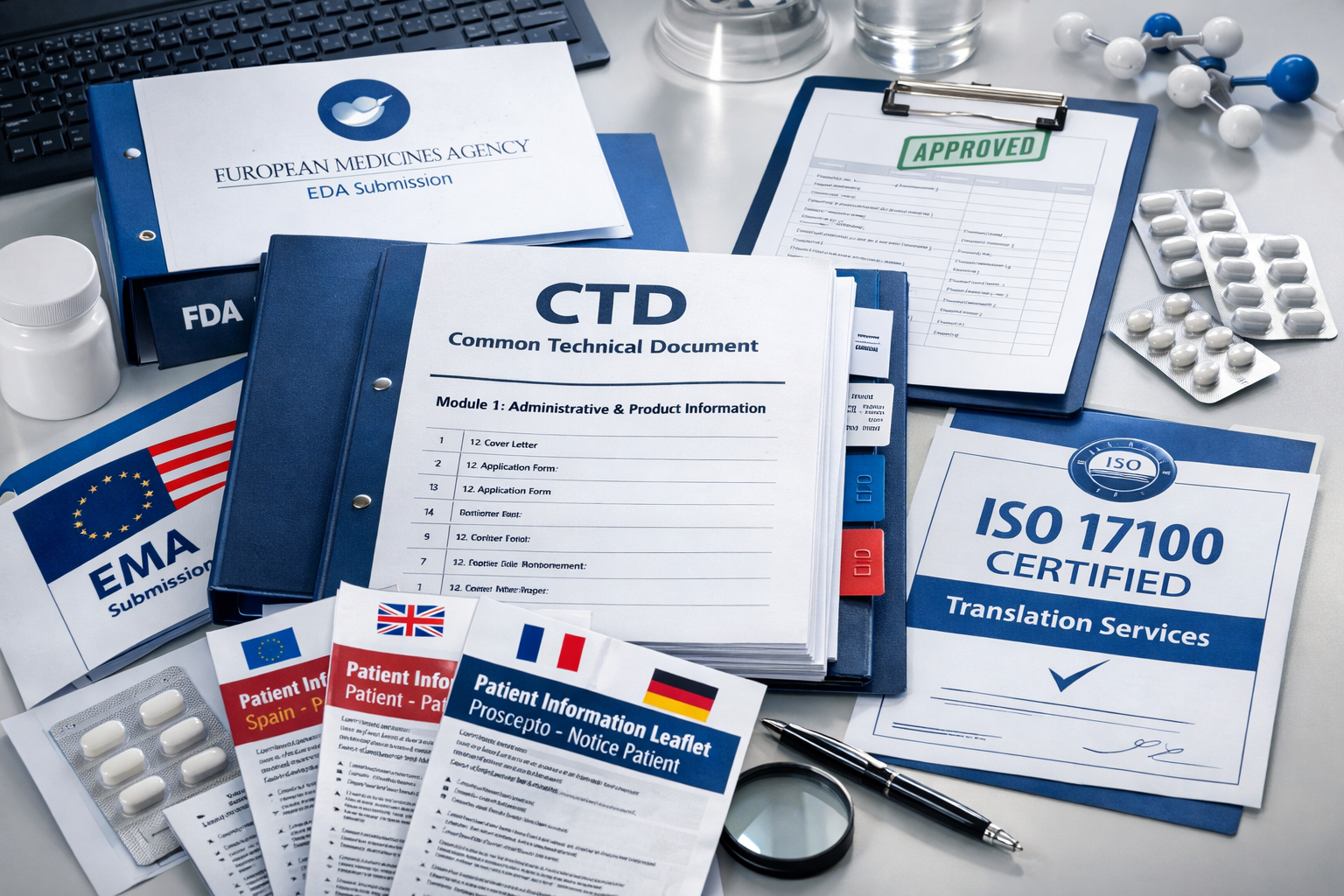
ISO 17100 certification provides the quality framework that aligns with GCP expectations. The standard mandates translator qualifications, independent revision by a second linguist, and documented project management. For sponsors, engaging an ISO 17100 certified provider creates defensible evidence of translation quality that satisfies inspector scrutiny.
Back-translation remains common practice for critical documents, particularly informed consent forms. This process involves translating the target-language version back into the source language, then comparing versions to identify potential meaning shifts. While resource-intensive, back-translation provides additional assurance for documents where precision directly affects patient safety.
Quality Assurance in Clinical Translation
Quality assurance in clinical documentation translation operates at multiple levels. Translator selection ensures that linguists possess relevant subject-matter expertise, not merely language proficiency. A translator handling oncology trial protocols should understand RECIST criteria, tumor staging conventions, and chemotherapy terminology.
The translation-editing-proofreading workflow mandated by ISO 17100 creates systematic error detection. The initial translator produces the target text. An independent editor reviews the translation against the source, verifying accuracy and consistency. A proofreader performs final quality checks on the target text alone, catching errors that comparative review might miss.
Rigorous review processes become particularly important for clinical documentation. Unlike marketing materials where stylistic preferences vary, clinical documents require factual precision. A single numerical error in dosing instructions or visit schedules can compromise patient safety and trial validity.
Version control presents ongoing challenges in clinical translation. Protocols undergo amendments, sometimes multiple times during a trial. Each amendment requires translation, and all language versions must remain synchronized. Professional translation management systems track document versions and flag inconsistencies that manual processes might miss.
Terminology Management for Trials
Terminological consistency distinguishes professional clinical translation from ad-hoc approaches. A trial glossary establishes approved translations for key terms, ensuring that "randomization" translates identically across all documents in a given language. Without such governance, different translators might render the same concept differently, creating confusion for site staff and regulators.
Customised glossaries capture sponsor-specific terminology alongside standard medical vocabulary. Pharmaceutical companies often have preferred translations for compound names, therapeutic area terms, and corporate language. Glossary development at project initiation prevents inconsistencies that would require costly corrections later.
Translation memory technology amplifies terminology management benefits. These systems store previously approved translations and suggest them when similar text appears in new documents. For clinical programs generating hundreds of documents over multi-year timelines, translation memory ensures consistency while reducing costs for repetitive content.
MedDRA coding adds another terminology layer. This standardized medical dictionary enables consistent adverse event classification across languages and regions. Translators working with safety data must understand MedDRA hierarchies and ensure that translated terms map correctly to standard codes.
Selecting a Translation Partner
Choosing a translation provider for clinical documentation requires evaluation beyond price and turnaround promises. Regulatory experience matters more than general translation volume. A provider with extensive clinical trial experience understands the documentation ecosystem, regulatory expectations, and quality requirements that generic translation suppliers may not appreciate.
Certification credentials provide baseline assurance. ISO 17100 certification demonstrates systematic quality management. Some providers additionally hold ISO 27001 for information security, relevant given the confidential nature of clinical trial data. Verify certifications directly with issuing bodies rather than accepting claims at face value.
Ask prospective providers about their clinical translation workflows. How do they select translators for clinical projects? What quality control steps occur before delivery? How do they handle terminology management across multi-document programs? Providers who cannot articulate clear answers to these questions may lack the specialization that clinical documentation demands.
Client testimonials from pharmaceutical and biotech companies indicate relevant experience. References from sponsors who have navigated regulatory submissions with the provider's translations offer more meaningful validation than generic client lists.
Ready to discuss your clinical documentation requirements? Request a quote for a detailed proposal tailored to your trial program's scope and timelines.