
EMA Submission Translation: Navigating EU Pharmaceutical Regulatory Requirements
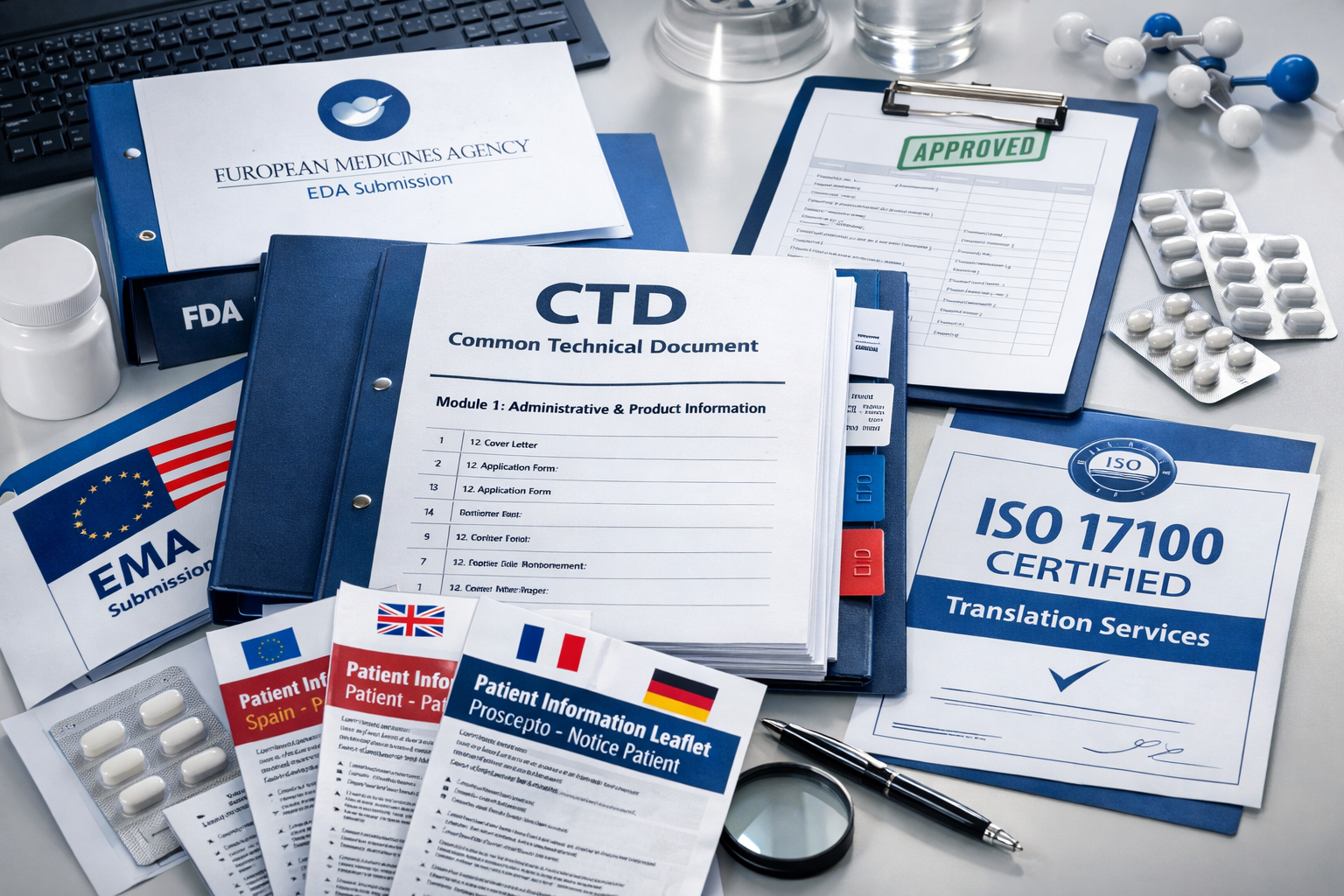
EMA submission translation requires precision, regulatory expertise, and strict adherence to the European Medicines Agency's Quality Review of Documents (QRD) templates. Pharmaceutical companies seeking marketing authorisation through the Centralised Procedure must translate product information into all official EU languages within demanding timelines—often just five days post-opinion. This guide explains the regulatory framework, document requirements, and quality standards that define successful EMA submissions.
Table of Contents
Understanding EMA Submission Translation Requirements
The European Medicines Agency serves as the regulatory gateway for pharmaceutical products entering the European market through the Centralised Procedure. This pathway enables companies to submit a single marketing authorisation application (MAA) that, once approved, grants access to all EU member states simultaneously.
EMA submission translation involves converting regulatory documentation from English—the Agency's working language—into the 24 official EU languages plus Norwegian and Icelandic. The translation scope extends beyond simple linguistic conversion; it demands regulatory expertise, therapeutic area knowledge, and strict compliance with EMA's QRD templates.
The Regulatory Context for EMA Submission Translation
The Committee for Medicinal Products for Human Use (CHMP) evaluates marketing authorisation applications and issues recommendations to the European Commission. Following a positive CHMP opinion, marketing authorisation holders have a compressed window to complete all required translations. This timeline creates significant pressure on pharmaceutical companies and their translation services partners.
The regulatory framework mandates that product information—comprising the Summary of Product Characteristics (SmPC), package leaflet, and labelling—be available in all official languages before the European Commission can grant marketing authorisation. Translation quality directly impacts patient safety and regulatory compliance.
Key Documents Requiring Translation
EMA submissions encompass several document categories, each with specific translation requirements and quality standards.
The Summary of Product Characteristics (SmPC) provides healthcare professionals with essential prescribing information. This document covers indications, posology, contraindications, warnings, interactions, and pharmacological properties. SmPC translation requires medical translation specialists who understand both clinical terminology and the regulatory conventions that define compliant pharma regulatory translation.
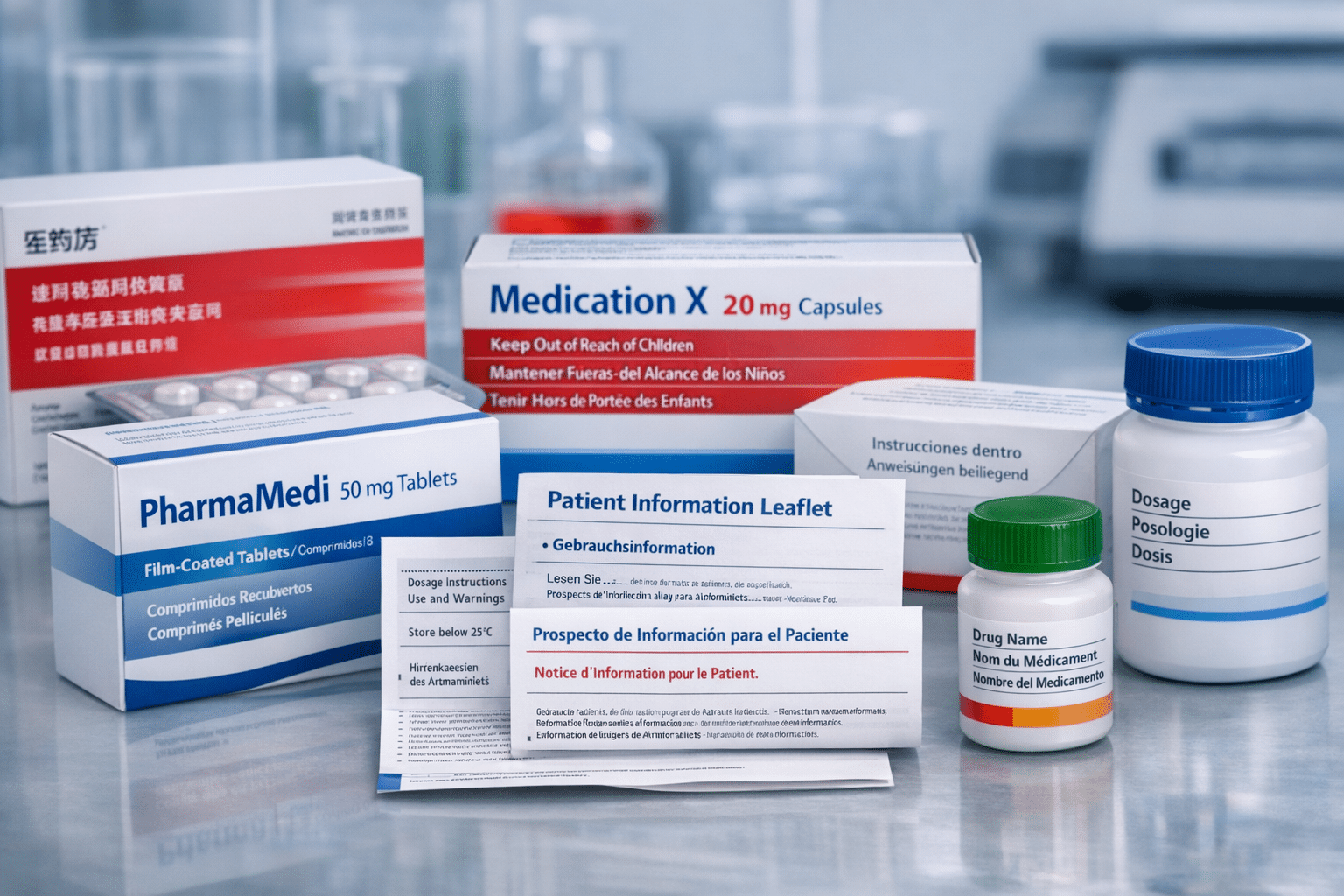
The Package Leaflet (PIL) communicates directly with patients and must use accessible language while maintaining medical accuracy. Translators must balance technical precision with readability, ensuring patients can understand dosing instructions, potential side effects, and safety information.
Labelling encompasses outer packaging, immediate packaging, and any accompanying materials. Country-specific requirements often apply, particularly for adverse drug reaction reporting contacts, which vary by member state.
The Linguistic Review Process
The EMA's Linguistic Review represents a critical quality gate in the marketing authorisation process. This standardised 25-day procedure occurs post-opinion and involves systematic review by national competent authorities across member states.
Following CHMP opinion (Day 0), the annotated English product information triggers the translation phase. By Day 5, marketing authorisation holders must submit translated versions to member states via the Eudralink system. National authorities then conduct linguistic review over 14 calendar days, returning reviewed files by Day 19.
The marketing authorisation holder must incorporate review feedback and submit final translations by Day 25. This compressed timeline leaves minimal margin for error, making advance preparation essential. Companies that initiate translation before the final opinion—typically around Day 180—position themselves for success.
QRD Template Compliance
The Quality Review of Documents Working Group develops and maintains standardised templates that govern product information format across the EU. QRD template compliance is mandatory, not optional.
Templates specify required headings, standard statements, formatting conventions, and pre-approved translations for common terms. The current version (10.4) addresses specific requirements for different product types, including advanced therapy medicinal products and biosimilars.
Translators working on EMA submissions must have direct access to QRD templates and reference documents. Customised glossaries built from QRD-approved terminology ensure consistency across document sets and language pairs.
Key compliance elements include font specifications, heading structures, black triangle requirements for additional monitoring, and mandatory contact information for pharmacovigilance reporting in each member state.
Quality Standards for EMA Translations
Regulatory translation demands quality assurance processes that exceed standard commercial translation requirements. The ISO 17100 certification provides an internationally recognised framework for translation service quality, mandating qualified translators, revision by second linguists, and documented quality management systems.
For EMA submissions, quality extends beyond linguistic accuracy to encompass regulatory compliance, therapeutic appropriateness, and format adherence. Quality control processes must verify that translations match QRD template specifications, use approved terminology consistently, and maintain cross-reference accuracy between SmPC, PIL, and labelling.
The rigorous review process for pharmaceutical translations typically includes translation by subject matter experts, revision by independent reviewers with regulatory experience, terminology verification against approved glossaries, format checking against QRD templates, and final proofreading before submission.
Managing Tight Deadlines
The five-day post-opinion window represents one of the most challenging deadlines in pharmaceutical translation. Successful management requires strategic planning that begins months before the expected CHMP opinion.
Proactive companies establish translation partnerships early in the regulatory process. They provide translators with evolving document versions, enabling terminology development and style alignment before final translations become urgent. This approach allows for native translators to familiarise themselves with product-specific terminology and develop appropriate customised glossaries.
Internal review processes should conclude before Day 210. Marketing authorisation holders who attempt to review translations during the final five-day sprint risk missing the submission deadline or compromising quality.
Translation memory technology accumulates approved segments across document iterations, reducing turnaround time for updates while maintaining consistency within the broader regulatory translation workflow. This proves particularly valuable for variations and periodic safety update reports (PSURs) that modify existing product information.
Selecting a Translation Partner
EMA submission translation requires specialised expertise that extends beyond general pharmaceutical translation capabilities.
Evaluate potential partners on their regulatory translation experience, particularly with centralised procedure submissions. Request case studies demonstrating successful completion of post-opinion translations within EMA timelines. Verify ISO 17100 certification and enquire about therapeutic area specialisation relevant to your products.
Capacity represents a critical consideration. EMA submissions require simultaneous translation into 24+ languages, each requiring qualified translators and reviewers with pharmaceutical expertise. Partners should demonstrate their network depth and contingency planning for urgent projects.
Technology infrastructure matters equally. Translation memory systems, terminology management platforms, and secure file transfer capabilities streamline workflows and protect confidential regulatory information. Integration with your internal systems can further accelerate collaboration.
Consider the value of long-term partnership over transactional relationships. Partners who understand your products, therapeutic areas, and regulatory history deliver more consistent results and adapt more efficiently to urgent requirements. Review client testimonials to assess reliability and service quality.
Ready to discuss your EMA submission translation requirements? Request a quote for a detailed proposal tailored to your regulatory timeline and documentation needs.